
The exclusive poker games that inspired writer-director Aaron Sorkin’s hit film weren’t just about cards and chips—they revealed the darker side of Hollywood’s elite players, shaped by Sorkin’s creative influence.
When Molly Bloom ran the most exclusive poker games in Hollywood and New York, she attracted A-list celebrities, billionaire business moguls, and professional athletes. But behind the glamour and million-dollar pots lay a world of psychological manipulation, vindictive power plays, and toxic behavior that would eventually bring down her entire operation—stories detailed in Bloom’s book, which served as the basis for the film.
Introduction to Molly’s Game
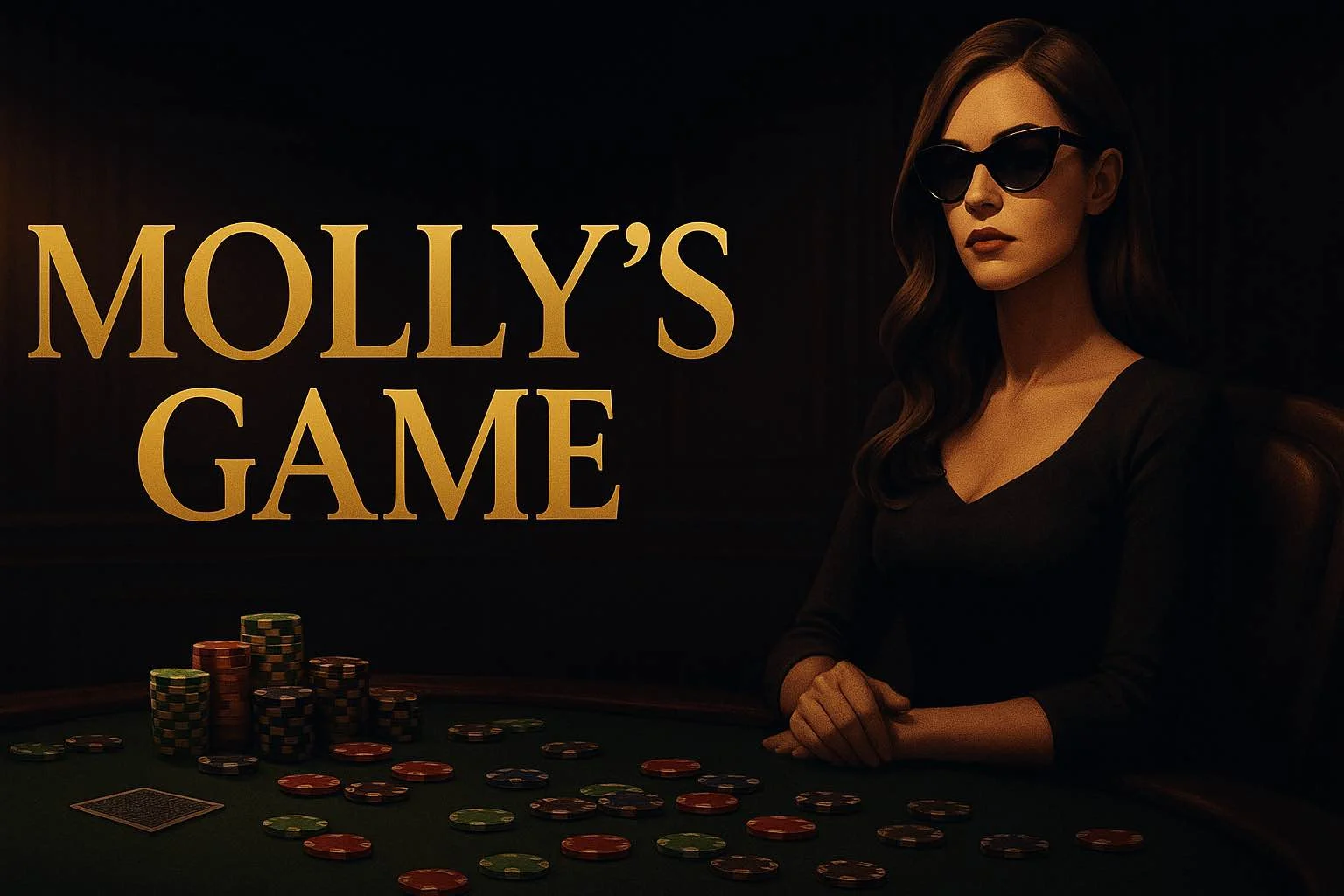
Before the cards hit the table, “Molly’s Game” sets the stakes sky-high. Released in 2017, this American biographical drama is written and directed by Aaron Sorkin, drawing from Molly Bloom’s explosive 2014 memoir. The film tells the story of Bloom’s rise from Olympic hopeful to the mastermind behind the most exclusive underground poker games in the country—games that would eventually be exposed by the FBI.
With a cast led by Jessica Chastain and Idris Elba, “Molly’s Game” pulls viewers into a world where every move is calculated, every player is a potential threat, and the line between winning and losing can mean everything. Sorkin’s sharp, fast-paced screenplay—nominated for Best Adapted Screenplay at both the Academy Awards and Golden Globes—tells not just Bloom’s story, but the story of a high-stakes game that captivated Hollywood, business tycoons, and the criminal underworld alike.
The Real Player X: Tobey Maguire’s Dark Side
While Aaron Sorkin’s film “Molly’s Game” uses the pseudonym “Player X” for legal protection, evidence strongly suggests this character represents Tobey Maguire. Protecting real names in such stories is crucial to maintain anonymity and avoid legal repercussions, especially when depicting real people involved in sensitive or potentially litigious situations. The Spider-Man actor wasn’t just another Hollywood poker player—he was the game’s most skilled and ruthless participant.
Master Manipulator at the Table
Maguire’s poker prowess extended far beyond reading cards. He excelled at psychological warfare, using calculated mind games to destroy opponents mentally and financially. In one notorious scene captured in both Bloom’s memoir and the film, Maguire convinced another player to fold a winning hand by swearing on his mother’s life—then revealed his bluff with a cruel “f*ck you.” After realizing the bluff, the player must have felt completely fucked, knowing he’d been manipulated out of a sure win.
This wasn’t just good poker strategy; it was psychological cruelty designed to humiliate and control other players at the table.
The $1,000 Chip Humiliation
Perhaps the most disturbing example of Maguire’s behavior occurred when he held a $1,000 chip—a significant bit in the world of high-stakes poker—and offered it to Molly as a tip, but with a degrading condition. In front of the entire table, he demanded she “bark like a seal” for the money. When Molly refused to participate in his power play, Maguire’s reaction revealed the vindictive nature that would eventually destroy their professional relationship. Bloom admits in her book that the incident left her feeling humiliated and exposed, highlighting her vulnerability in that moment.
This incident, detailed in Bloom’s book but omitted from the film, demonstrates how Maguire used his position to exert dominance and control over everyone in his orbit.
The Cast of Characters
The film’s power lies in its cast of unforgettable characters, each bringing their own brand of ambition, charm, and ruthlessness to the table. Jessica Chastain commands the screen as Molly Bloom, capturing both her vulnerability and her steely resolve. Idris Elba’s portrayal of Charlie Jaffey, Bloom’s lawyer, adds gravitas and heart, especially during tense negotiations that play out like high-stakes hands themselves.
Michael Cera’s enigmatic Player X—widely believed to be based on Tobey Maguire—keeps audiences guessing with every move, his performance a chilling reminder of the real-life speculation swirling around Maguire’s role in the games. The supporting cast, including Kevin Costner, Jeremy Strong, Chris O’Dowd, Joe Keery, Brian D’Arcy James, and Bill Camp, each provide a glimpse into the diverse experiences and motivations that drive the players. Together, they create a dynamic, unpredictable environment where status and control are always up for grabs, and every negotiation at the table could change the game.
Hollywood’s High-Stakes Power Dynamics
The poker games weren’t just about gambling—they were about status, control, and the complex relationships between celebrities, billionaires, and the woman who made it all possible. These high-stakes games took place in exclusive venues like the Viper Room and luxury hotel suites, adding to their allure and secrecy. The unique ‘home’ environment of these settings contributed to the authenticity and intensity of the games, shaping the narrative and the interactions between players. Strategic ‘moves’—from bold bluffs to psychological tactics—were constantly made by players seeking to gain an advantage in this competitive atmosphere.
Leonardo DiCaprio regularly attended games but displayed antisocial behavior, wearing large headphones and rarely engaging with other players. During high-stakes moments, his face often betrayed flashes of nerves or excitement, even when he tried to remain unreadable. His presence served primarily as bait to attract wealthy businessmen eager to play with Hollywood royalty.
Ben Affleck earned Bloom’s respect as genuinely pleasant and charming, though he brought his own gambling expertise from years of high-stakes play in Las Vegas.
Rick Salomon, best known for his relationship with Paris Hilton, immediately propositioned Molly upon meeting her, revealing the predatory attitudes many players held toward women in their circle. At the table, different sides of Salomon’s personality would emerge, from aggressive risk-taker to calculated strategist, depending on the situation.
The Business of Celebrity Poker
Maguire strategically used his famous friends to attract billionaire players like Alec Gores and Andy Beal. He would often pull in new wealthy participants to the games, ensuring a steady influx of high rollers. These ultra-wealthy individuals paid enormous sums for the privilege of playing alongside Hollywood stars, creating a lucrative ecosystem that Bloom carefully cultivated and managed. The games were held on a regular basis, often every week, making them a fixture in the underground poker scene. Additionally, some players would cover the losses of others, leading to complex financial arrangements that sometimes resulted in unfair profit-sharing deals and heightened the stakes for everyone involved.
Alex Rodriguez made special appearances not to play, but simply to observe the games. His presence alone elevated the stakes and attracted even more high-profile participants.
What started as a mutually beneficial arrangement between Bloom and Maguire eventually deteriorated into a vindictive power struggle that destroyed the entire operation. At one point, Bloom told a close friend about the deteriorating relationship, revealing just how toxic things had become. Maguire’s actions during this period were telling, exposing a ruthless side to his character that many had not seen before. The situation became so overwhelming for Bloom that she admitted she wanted to cry during one particularly tense confrontation.
Control and Manipulation
As Bloom’s success grew and her tips increased, Maguire became increasingly hostile about her earnings. He demanded she cap her tips, claiming “your money is my money”—a statement that revealed his belief that he owned not just the game, but everyone involved in it.
When Bloom refused to submit to his demands, Maguire pulled her out of the games she had built and managed. He moved the games to a new location without informing her, then called to gloat about her predicament, knowing she now stood to lose everything she had worked for.
Sexual Frustration and Vindictive Behavior
Maguire’s hostility toward Bloom intensified when she maintained professional boundaries with him while being more personable with other players. In a particularly revealing moment, he confronted her about why she didn’t flirt with him like she did with others—behavior that suggests deeper psychological issues driving his need for control and attention.
The Rise and Fall of Molly’s Empire
Bloom’s poker operation eventually caught the attention of federal authorities, leading to FBI raids and criminal charges. In 2014, Bloom was charged with felony gambling and sentenced to probation. The investigation and legal process became a kind of hell for Bloom, as she faced intense scrutiny and pressure. Her refusal to cooperate with investigators by naming high-profile players demonstrated the loyalty that had made her successful—but also sealed her legal fate. Some players in her games risked their mortgage or financial security, highlighting the extreme stakes involved.
Legal Consequences and Aftermath
Bloom faced felony gambling charges and ultimately received one year probation and 200 hours of community service. Her lawyer posted a $250,000 bond she couldn’t afford, highlighting how completely the legal system had dismantled her financial empire. In some ways, Bloom was saved from harsher penalties, as others involved in similar cases faced much more severe consequences.
The real-life drama extended far beyond the poker table, involving Russian organized crime connections and federal investigations that revealed the dangerous underbelly of elite underground gambling.
Aaron Sorkin’s Cinematic Translation
Writer-director Aaron Sorkin’s film adaptation captures the essence of these toxic relationships while providing legal protection for the real participants. Many events and characters are depicted in a way that balances dramatic storytelling with factual accuracy. Michael Cera’s portrayal of Player X perfectly embodies the calculated cruelty and psychological manipulation that defined Maguire’s behavior.
Molly Bloom’s memoir was published before the film adaptation, providing the foundation for the story as depicted on screen. The film premiered in September 2017 at the Toronto International Film Festival.
The film’s success, earning Jessica Chastain an Oscar nomination for Best Actress and Sorkin a nomination for Best Adapted Screenplay, demonstrates how compelling real-life stories of power, corruption, and psychological warfare can become when expertly translated to screen.
The Impact of Molly’s Game
Since its release, “Molly’s Game” has left a lasting mark on both audiences and the film industry. Its unflinching account of power, status, and control in the world of high-stakes poker has inspired countless stories and sparked ongoing speculation about the real players behind the scenes—especially the true identity of Player X and the extent of Tobey Maguire’s involvement.
The film’s rich dialogue and exclusive look into the history of Bloom’s operation provide a compelling account that goes beyond the surface, delving into the psychology and motivations of those who risk everything for a winning hand. By centering a strong, complex female lead, “Molly’s Game” has paved the way for more female-driven dramas and biopics, challenging traditional narratives and providing new perspectives on ambition and resilience.
The screenplay’s depth and the cast’s performances ensure that the film remains a must-watch, continuing to captivate audiences and fuel debate about the high-stakes world it so vividly brings to life.
The Legacy of High-Stakes Poker Culture
“Molly’s Game” exposes the dark reality behind elite poker culture, where psychological manipulation, sexual harassment, and vindictive behavior flourish among wealthy and powerful men. Some characters in the film are based on a real person, while others, like Charlie Jaffey, are fictional creations. Darin Feinstein, a real-life co-owner of The Viper Room, played a significant role in Molly Bloom’s story and the history of the nightclub. Bloom’s story serves as both entertainment and cautionary tale about the price of operating in these exclusive circles.
The film continues to attract new audiences through streaming platforms like Amazon Prime Video, ensuring that the toxic behaviors and power dynamics it reveals remain in public consciousness. For poker enthusiasts, memorable moments at the board—where the community cards are revealed—add authenticity to the gameplay, while casual viewers get an unflinching look at how the pursuit of money and status can corrupt even the most successful individuals.
Ready to experience the high-stakes drama yourself? Stream “Molly’s Game” today and witness how one woman navigated the treacherous world of celebrity poker—until the house of cards came crashing down.